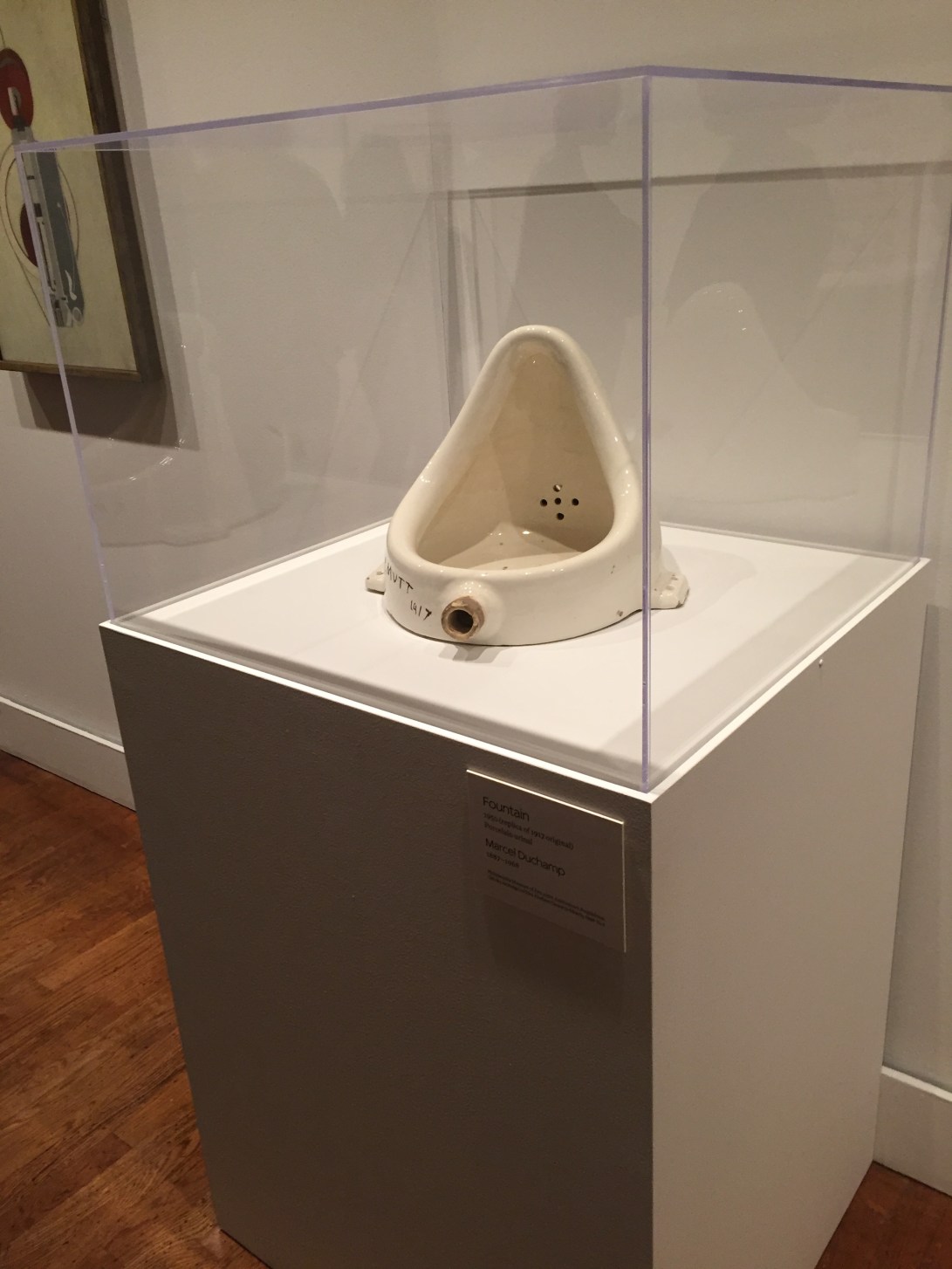
This exhibit goes through the changes in American still life painting from just after The Revolutionary War until the mid 20th century. I thought the exhibit was well done. The subjects for the artworks were mostly of animals, objects and flowers. I feel that I gained a better understanding of the purpose and role of american still life painting as a whole and over time than I did on any particular still life artist. My favorite section of the exhibit was the art of the mid 19th century. The elaborate and idealized art displayed in this section really resonated with me. One thing that I found interesting was how many still life paintings Charles Willson Peale did. I had known him from his portraits of american presidents. He also named a lot of his children after famous artist including Rubens and Titian. A lot of Peale’s family painted still lifes and their works were also in the museum. One artist I felt was especially highlighted was William Michael Harnett. Harrnett’s work left a strong impression on me for it’s realness. The audio guide passage on Harnett was very good in describing the pub setting for his artwork. A lot of emphasis was put on Harnett’s work ‘After the Hunt’ (1883). In the mid 19th century they depicted still lifes in their nicest form instead of what was scientifically correct. It was a time of indulgence. In the late 19th century the art became more abstract. The role of still life’s switched more to the fast electric movement of the times. Georgia O’Keeffe was featured, as well as a mobile by Alexander Calder. In the final room I was completely shocked to see ‘Fountain’ (1917) by Marcel Duchamp. I had first learned about the piece from studying art history. I knew that this object is important to the Dada art movement and art history in general. These were my thoughts on the exhibit.
Pictured below from the exhibit is ‘Fountain’ by Marcel Duchamp, it was a reproduction from circa 1950.
 Tyszka